
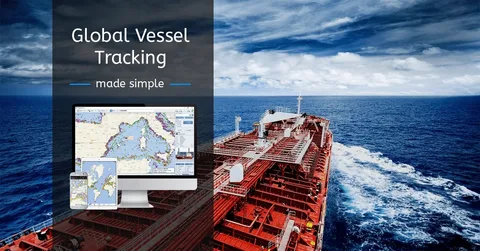
The global maritime industry depends heavily on accurate, real-time information. With thousands of vessels moving across oceans every day, monitoring ship positions and movements has become essential for safety, trade, and efficiency. One technology sits at the core of this system: AIS vessel tracking.
AIS, or Automatic Identification System, allows ships to share their identity, position, and navigation data with other vessels and monitoring stations. This data is then collected, processed, and used worldwide for multiple maritime applications. Understanding how AIS vessel tracking works helps users interpret maritime data more accurately and appreciate its role in global shipping.
This guide explains how AIS data is collected, how it is processed, and how it is used across the maritime ecosystem.
What Is AIS Vessel Tracking?
AIS vessel tracking is a system that enables ships and boats to automatically transmit and receive navigation information. The system was originally designed to improve maritime safety by reducing collision risks, but it has evolved into a powerful global tracking solution.
AIS tracking provides visibility into:
- Vessel identity
- Current position
- Speed and direction
- Voyage status
This information forms the foundation of modern maritime data platforms.
How AIS Data Is Collected
AIS data collection involves multiple layers of technology working together.
Onboard AIS Transponders
Most commercial vessels are equipped with AIS transponders. These devices automatically broadcast vessel data at fixed intervals depending on speed and movement.
Shore-Based AIS Receivers
Coastal AIS stations receive signals from vessels operating near land. These receivers provide high-accuracy data for ports, coastal routes, and busy shipping lanes.
Satellite AIS Collection
For vessels traveling far from coastlines, satellites play a critical role. Satellite AIS systems capture signals from ships in remote ocean regions, ensuring near-global coverage.
Types of AIS Messages
AIS transmits different message types depending on the information being shared.
Static Data
Static data includes vessel name, MMSI number, IMO number, and ship type. This information changes rarely.
Dynamic Data
Dynamic data includes position, speed, heading, and course. This data is updated frequently during navigation.
Voyage-Related Data
Voyage data may include destination, estimated time of arrival, and navigation status.
How AIS Data Is Processed
Raw AIS signals are not immediately ready for public use. They must go through several processing steps.
Data Cleaning
Incorrect, duplicate, or incomplete signals are filtered out to improve accuracy.
Data Validation
AIS data is verified against known vessel identifiers and historical records.
Mapping and Visualization
Once processed, AIS data is plotted onto digital maps, allowing users to view live vessel positions or replay historical routes.
How Maritime Data Is Used Globally
AIS vessel tracking data serves many critical functions across the maritime industry.
Maritime Safety
AIS helps prevent collisions by increasing situational awareness for ships and authorities.
Port and Traffic Management
Ports use AIS data to schedule arrivals, manage congestion, and optimize berth usage.
Shipping and Logistics
Shipping companies analyze AIS data to improve route planning, reduce delays, and manage fleet performance.
Environmental Monitoring
AIS data supports environmental research, including emission analysis and monitoring protected marine areas.
Security and Compliance
Authorities use tracking data to monitor suspicious activity, enforce regulations, and ensure maritime compliance.
Who Relies on AIS Tracking Data?
AIS data is used by a wide range of stakeholders:
- Shipping companies
- Port authorities
- Coast guards
- Marine researchers
- Insurers and analysts
Even educational institutions and maritime students rely on AIS data for learning and research.
Accuracy and Limitations of AIS Tracking
Although AIS is highly effective, it has certain limitations.
Signal Gaps
Signals may be lost in extreme weather or remote regions.
Manual Data Entry Errors
Incorrect voyage data entered by crew can affect accuracy.
Non-AIS Vessels
Some smaller boats are not required to carry AIS equipment.
Despite these challenges, AIS remains the most widely used maritime tracking system worldwide.
The Future of AIS Vessel Tracking
Advancements in satellite technology, data analytics, and artificial intelligence are shaping the future of AIS tracking.
Future developments include:
- Improved satellite coverage
- Faster data updates
- Predictive vessel movement analysis
- Enhanced maritime safety tools
These innovations will further strengthen the global maritime data ecosystem.
Final Thoughts
AIS vessel tracking plays a critical role in how maritime data is collected and used globally. From improving safety to optimizing logistics and supporting environmental research, AIS data has become an essential resource for the maritime world.
By understanding how AIS works and how its data is processed, users can better interpret vessel movements and make informed decisions based on reliable maritime information.