
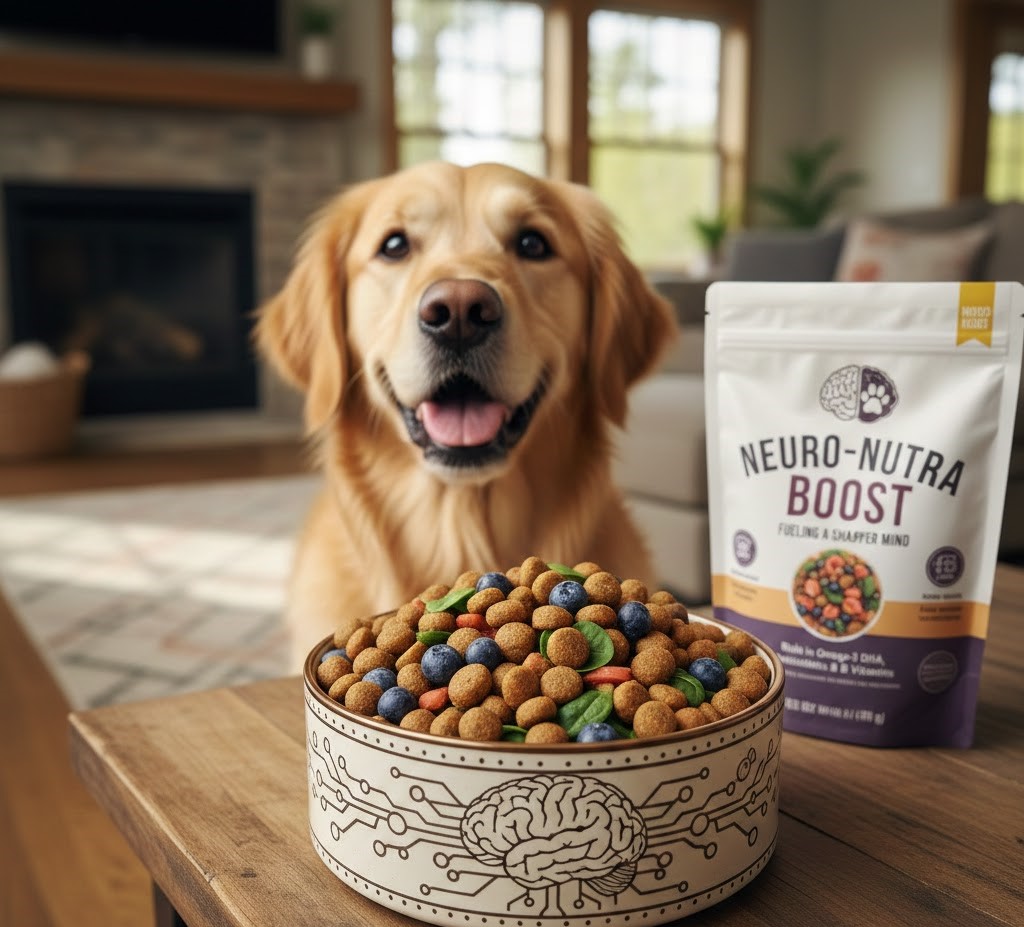
Most dog food brands slap “brain health” on packaging without changing anything meaningful in the formula. Cognitive support is not magic. It’s nutrition plus biology.
For dog food brain health, these factors matter:
1. DHA and EPA
If a dog food doesn’t list DHA (from fish oil or algae), it’s not supporting brain health. Period.
-
Puppies: DHA supports brain development and learning
-
Adult dogs: Helps memory and focus
-
Senior dogs: Slows cognitive decline
Cheap foods avoid DHA because it’s expensive and unstable. That’s why many “brain health” claims are weak.
2. Antioxidants That Actually Cross the Blood–Brain Barrier
Not all antioxidants help the brain.
Effective ones include:
-
Vitamin E
-
Vitamin C
-
Selenium
-
Polyphenols (from blueberries, spinach, turmeric)
If a food just says “antioxidant blend” without specifics, assume it’s useless.
3. B Vitamins (Especially B6, B9, B12)
These support neurotransmitter function. Deficiency leads to:
-
Confusion
-
Anxiety
-
Reduced learning ability
Many grain-free foods accidentally underdose these.
4. Protein Quality Over Quantity
Brains run on amino acids. Low-quality protein = poor neurotransmitter production.
If the first ingredient is vague (“meat meal”), don’t expect cognitive benefits.
Dog Food Brain Health by Life Stage
Puppies
-
DHA is mandatory
-
Avoid fillers that reduce nutrient absorption
-
Learning speed depends heavily on early nutrition
Adult Dogs
-
Maintenance DHA + antioxidants
-
Stable blood sugar = stable cognition
Senior Dogs
This is where brain health dog food actually matters.
Signs of decline:
-
Disorientation
-
Night pacing
-
Reduced responsiveness
Food alone usually isn’t enough at this stage.
Brain Health Supplements for Dogs: When Food Isn’t Enough
Let’s be blunt: supplements for dog brain health are often more effective than food, especially for aging dogs.
Supplements That Actually Work
1. Fish Oil (High-DHA)
This is the foundation. No fish oil = no real brain support.
2. Phosphatidylserine
-
Supports memory
-
Improves focus
-
Clinically studied in cognitive decline
Most dog owners have never heard of it. That’s a red flag for the industry.
3. SAM-e
-
Supports neurotransmitter turnover
-
Helps mood and cognitive clarity
-
Especially useful in senior dogs
4. MCT Oil (Medium-Chain Triglycerides)
Brains can use ketones when glucose metabolism declines. MCTs provide that alternative fuel.
Supplements That Are Mostly Hype
-
Generic herbal blends
-
“Calming chews” without DHA
-
Low-dose nootropic blends
If the label avoids exact milligrams, walk away.
Supplements for Dog Brain Health vs Food: Hard Truth
Food is preventive.
Supplements are corrective.
If your dog already shows:
-
Memory issues
-
Anxiety changes
-
Confusion
Then brain health supplements for dogs are not optional. Food alone won’t reverse damage.
Gut–Brain Connection in Dogs (Most Brands Ignore This)
Cognitive health isn’t just about the brain. It’s about the gut.
-
70% of immune activity happens in the gut
-
Neurotransmitters are influenced by gut bacteria
-
Inflammation from poor digestion accelerates cognitive decline
This is where Viome vs Tiny Health becomes relevant.
Viome vs Tiny Health: Which Matters for Brain Health?
Let’s clear confusion.
Viome
-
Focus: Functional gene expression (RNA-based)
-
Strength: Metabolic and inflammation insights
-
Weakness: Less microbiome depth
Tiny Health
-
Focus: Gut microbiome composition
-
Strength: Bacterial diversity and balance
-
Weakness: Less metabolic interpretation
Which Is Better for Cognitive Health?
Neither is designed for dogs. That’s the inconvenient truth.
However, conceptually:
-
Tiny Health’s microbiome approach aligns better with long-term brain health
-
Viome’s inflammation focus is more relevant for disease management
If applied to dogs (hypothetically):
-
Microbiome balance (Tiny Health model) = better neurotransmitter regulation
-
Reduced inflammation (Viome model) = slower cognitive decline
Dog food companies barely scratch this surface.
Practical Brain Health Strategy for Dogs (No BS)
Here’s what actually works:
Step 1: Fix the Base Diet
-
High-quality protein
-
DHA clearly listed
-
Real antioxidants, not marketing blends
Step 2: Add Targeted Supplements
-
Fish oil (measured DHA)
-
Phosphatidylserine or SAM-e for seniors
-
MCT oil if cognitive decline is present
Step 3: Support the Gut
-
Probiotics with strain specificity
-
Avoid constant food switching
-
Reduce ultra-processed kibble
Step 4: Monitor Behavior, Not Hype
If a product works, you’ll see:
-
Better focus
-
Improved sleep cycles
-
Reduced anxiety
-
Faster response to commands
If you see nothing after 6–8 weeks, it’s ineffective.
Final Reality Check
-
Most dog food brain health claims are overstated
-
Brain health supplements for dogs outperform food for aging dogs
-
The gut–brain axis is real, but underutilized
-
Viome vs Tiny Health highlights where the pet nutrition industry is behind human science
If a brand avoids transparency, dosing, or evidence, it’s not helping your dog’s brain — it’s helping their margins.